
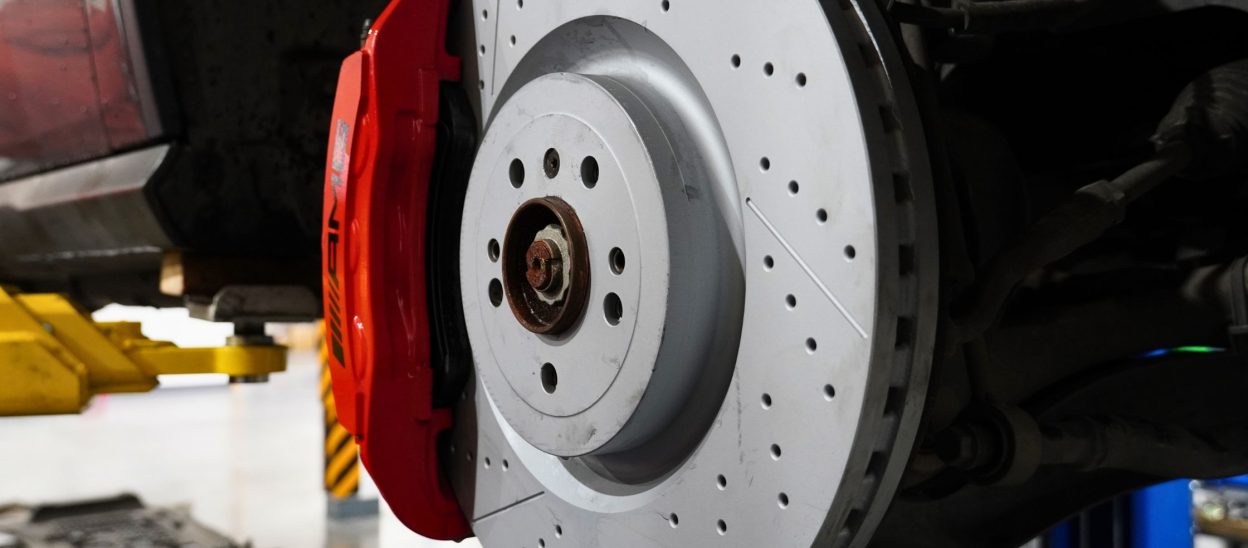
The Safety Role of Brakes (Beyond Just “Stopping”)
Brakes do far more than bring a vehicle to a halt. Modern braking systems are the backbone of advanced safety technologies such as ABS (anti-lock braking systems) and ESC (electronic stability control). These systems rely on precise brake pressure at each wheel to prevent lock-ups, maintain steering control, and help stabilize the vehicle in slippery or emergency conditions.
However, if the core hydraulic system, pads, rotors, and brake fluid, isn’t in good condition, these electronic aids cannot perform as designed. Worn pads, glazed rotors, or contaminated fluid compromise the base braking system, weakening the effectiveness of the very safety features meant to protect drivers and passengers.
Stopping Distance Is Unforgiving
When it comes to stopping, even a small reduction in brake performance makes a big difference. U.S. safety standards (FMVSS No. 135) set strict stopping-distance requirements for passenger vehicles, but neglected brakes can cause real-world stopping distances to exceed those benchmarks.
The physics are harsh: increasing speed by just 10 mph can add dozens of feet to the stopping distance. For example, a car traveling at 50 mph may need about 221 feet to stop, while the same car at 60 mph may require nearly 292 feet. With worn or poorly maintained brakes, that distance grows even longer, sometimes enough to be the difference between avoiding an accident and causing one.
Brake Fluid: The Hidden Weak Link
While brake pads and rotors wear visibly, brake fluid often goes unnoticed. Most vehicles use glycol-based fluids (DOT 3, DOT 4, or DOT 5.1) that are hygroscopic, meaning they absorb moisture over time. The more water absorbed, the lower the fluid’s boiling point becomes.
This matters because under heavy braking, such as driving downhill, towing, or stopping repeatedly in traffic, brake components generate extreme heat. If the fluid boils, vapor bubbles form in the lines, leading to a soft pedal or sudden brake fade, also known as vapor lock.
Studies show that brake fluid performance declines significantly as a vehicle ages. That’s why many manufacturers recommend replacing brake fluid every 2–3 years, even if it looks clear. Regular flushing restores boiling resistance and ensures consistent, reliable braking power.
What Routine Brake Maintenance Prevents
Staying on top of brake service isn’t just about stopping smoothly, it prevents a range of dangerous problems:
- Pad and rotor wear or glazing: Timely replacement keeps friction surfaces effective and maintains a firm pedal feel.
- Uneven braking and pull: Sticking calipers or contaminated surfaces can cause the vehicle to veer during braking. Regular service prevents this imbalance.
- Overheating and brake fade: Thin rotors and old fluid cannot dissipate heat effectively, leading to longer stopping distances.
- Reduced ADAS performance: Systems like ABS and ESC assume a healthy braking foundation. Neglecting maintenance reduces their ability to intervene effectively when needed.
Warning Signs That Call for Service Now
Brakes often give clear warnings when attention is needed. Ignoring them can compromise safety and lead to costly repairs. Watch for:
- Dashboard warning lights: Brake, ABS, or ESC lights that remain illuminated.
- Soft or sinking pedal: A pedal that feels spongy, sinks too easily, or requires more travel before engaging.
- Fluid leaks: Brake fluid is typically clear to amber and oily, any leaks around wheels or under the car should be taken seriously.
- Noises: High-pitched squeals or grinding sounds, especially at low speeds, usually indicate worn pads or metal-on-metal contact.
- Vibrations or pulsations: Felt in the pedal or steering wheel, often caused by rotor thickness variation or warping.
- Pulling to one side: The vehicle veers when braking, often due to uneven pressure or stuck calipers.
- Burning smell: A sharp odor after braking may signal overheating pads or fluid.
AAA and other safety organizations highlight these as immediate prompts for inspection of pads, rotors, hoses, and fluid.
Core Maintenance Tasks (What Good Service Includes)
A quality brake service should be more than just swapping pads. A comprehensive approach covers:
- Full inspection: Pads, rotors/discs, caliper slides, brake hoses, parking brake, and fluid lines are checked for wear or leaks.
- Pad and rotor service: Pads are replaced before reaching minimum thickness. Rotors are replaced to specifications, and hardware is cleaned and lubricated.
- Brake fluid test and replacement: Moisture content or boiling point is tested; fluid is replaced per OEM schedule (typically every 2–3 years). Proper bleeding restores firm pedal feel and ensures peak ABS function.
- System checks: ABS/ESC fault codes are scanned, wheel-speed sensors verified, and braking performance confirmed in a road test (straight stops, no pull, solid pedal response).
How Often to Service Brakes
- Inspection: At least once a year, or with each tire rotation.
- Pad/rotor replacement: When worn, uneven, or out of specification. Never ignore squeal indicators or grinding noises.
- Fluid replacement: Follow the owner’s manual, commonly every 2–3 years, or sooner if fluid tests show excess moisture or low boiling point.
Cost Versus Risk Reality
Brake components, pads, rotors, and fluid, are routine wear items. Replacing them on schedule is far less expensive than:
- Repairing damaged calipers, master cylinders, or ABS components.
- Facing accidents caused by extended stopping distances or loss of control.
Research by NHTSA confirms that ABS and ESC are designed to enhance control in emergencies, but they cannot compensate for neglected brake hardware or degraded fluid. Preventative maintenance is the most affordable insurance for safety.
One-Page Takeaway
- Brakes are the foundation for ABS/ESC and crash avoidance. Without healthy pads, rotors, and fluid, advanced systems can’t function as intended.
- Stopping distance increases rapidly with speed, and any brake degradation makes that worse.
- Brake fluid ages, absorbing water and losing effectiveness, so test and replace it regularly.
- Always watch for warning signs: lights, soft pedal, noises, vibration, pull, or leaks.
- Quality service means inspection, proper pad/rotor work, fluid maintenance, and ABS/ESC checks.
FAQs About Brake Maintenance
Q1. How often should brakes be inspected?
At least once a year or during every tire rotation. Frequent drivers, commuters, or those in mountainous or urban stop-and-go conditions may need more frequent checks.
Q2. What’s the average lifespan of brake pads?
Typically 20,000–70,000 miles, depending on driving style, vehicle type, and conditions. City driving wears pads faster than highway cruising.
Q3. Can old brake fluid really cause failure?
Yes. Moisture-contaminated fluid lowers the boiling point and can lead to vapor lock under hard braking, resulting in a soft pedal or sudden fade.
Q4. Is it safe to keep driving if the brake warning light comes on?
No. A lit brake warning light signals a potentially serious issue, low fluid, worn pads, or system fault. Immediate inspection is essential.
Conclusion
Brake maintenance is not just another service item; it is central to vehicle safety. Healthy brakes shorten stopping distances, support advanced safety systems like ABS and ESC, and protect drivers, passengers, and everyone on the road.
By recognizing warning signs early, following manufacturer-recommended service intervals, and insisting on thorough inspections, drivers can avoid costly repairs, extend component life, and, most importantly, stay safe behind the wheel.
Bottom line: Reliable brakes are the difference between a close call and a collision. Treating brake maintenance as a priority ensures peace of mind and safer journeys.