
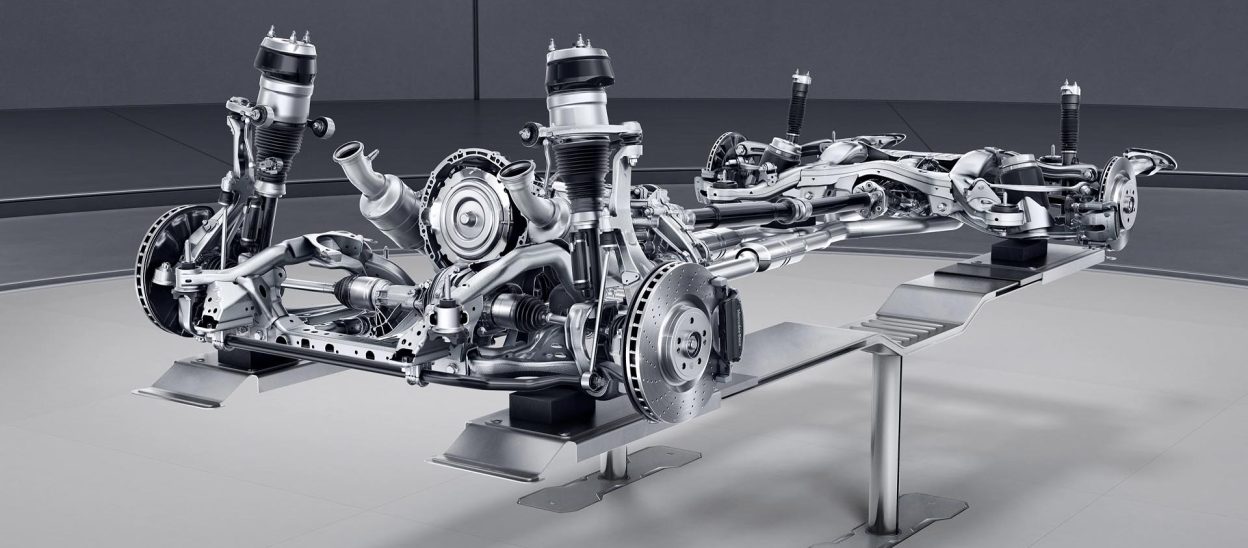
When it comes to luxury ride comfort and precise handling, Mercedes-Benz has consistently set the benchmark in automotive engineering. Among its most advanced innovations is the AIRMATIC Suspension System — a fully adaptive air suspension designed to deliver an exceptional balance of smoothness, stability, and dynamic control.
Unlike traditional suspension systems, AIRMATIC continuously adjusts to changing road conditions and driving styles, ensuring a refined “floating” ride feel while maintaining sharp, confident handling. Whether cruising on the highway or navigating tight corners, the system works behind the scenes to optimize performance in real time.
In this complete guide, we’ll break down how AIRMATIC works, explore its key components, discuss common issues, share maintenance tips, and explain why professional diagnostics are essential for long-term reliability. If you’re searching for expert Mercedes repair, understanding how this advanced suspension system functions will help you protect your investment and keep your vehicle performing at its best.
What Is Mercedes-Benz AIRMATIC Suspension?
AIRMATIC is an advanced, electronically controlled air suspension system engineered by Mercedes-Benz to automatically adjust ride height and damping characteristics based on real-time driving conditions. Unlike traditional suspension setups that rely on fixed-rate steel coil springs, AIRMATIC replaces conventional springs with air springs (air struts) paired with adaptive dampers. This combination allows the vehicle to deliver a smoother, more refined ride without sacrificing handling precision.
What makes AIRMATIC truly sophisticated is its ability to continuously monitor and react to multiple driving variables at once. The system gathers data from various sensors throughout the vehicle, including:
- Vehicle speed
- Steering input
- Load weight (passengers and cargo)
- Road surface conditions
- Driving mode selection (Comfort, Sport, etc.)
Using this constant stream of information, the suspension control module calculates the optimal ride height and damper stiffness for the situation. It then adjusts air pressure inside the air struts and modifies damping force in milliseconds.
For example, at highway speeds, the system may automatically lower the vehicle slightly to improve aerodynamics and stability. During sharp cornering, it stiffens the suspension to reduce body roll. When driving over rough pavement, it softens the damping to absorb impacts more effectively.
All of these adjustments happen seamlessly and automatically, often without the driver even noticing. The result is a suspension system that adapts in real time — delivering both exceptional comfort and confident control in virtually any driving scenario.
How AIRMATIC Works
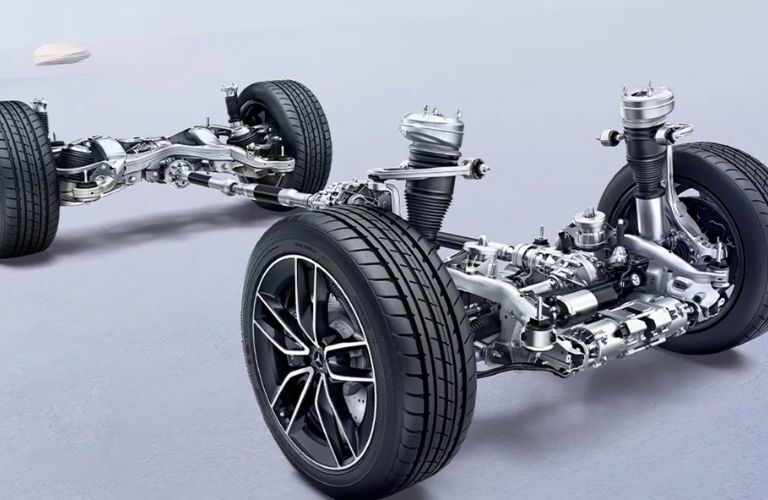
The AIRMATIC suspension system is engineered to achieve a perfect balance between two essential characteristics: luxury-level comfort and confident, sporty handling. Developed by Mercedes-Benz, this advanced system replaces traditional fixed-rate metal springs with compressed air technology, allowing the suspension to adapt dynamically to driving conditions. Instead of being limited to one stiffness setting, AIRMATIC continuously adjusts to deliver the ideal ride experience at any given moment.
Here’s a closer look at how the system functions:
Air Springs Inflate or Deflate
Each wheel is equipped with an air strut that contains a flexible air bladder. By increasing or decreasing air pressure inside the strut, the system can raise or lower the vehicle’s ride height. This not only improves comfort but also enhances aerodynamics and stability at different speeds.
Adaptive Damping System (ADS)
The electronically controlled dampers adjust stiffness within milliseconds. When the vehicle encounters rough pavement, the dampers soften to absorb vibrations. During cornering or sudden maneuvers, they stiffen instantly to reduce body roll and improve steering precision.
Automatic Level Control
If additional passengers or cargo add weight to the vehicle, AIRMATIC automatically compensates by increasing air pressure in the suspension. This keeps the vehicle level at all times, maintaining proper alignment, balanced handling, and consistent ride quality.
Drive Mode Integration
AIRMATIC works in harmony with selectable drive modes. In Comfort mode, the suspension prioritizes smoothness and refinement. In Sport mode, it becomes firmer and more responsive, delivering sharper handling and greater road feedback. Some models also offer additional custom settings for personalized driving preferences.
The result is a vehicle that glides smoothly over rough roads yet feels stable, planted, and controlled during spirited driving. This seamless transition between comfort and performance is what makes AIRMATIC a defining feature of the Mercedes-Benz driving experience.
Key Components of the AIRMATIC System
Understanding the major components of the AIRMATIC system helps clarify why regular maintenance and timely repairs are so critical. Because this advanced suspension system developed by Mercedes-Benz relies on both mechanical and electronic parts working together, the failure of even one component can disrupt overall performance, comfort, and safety.
Here are the key parts that make up the AIRMATIC suspension system:
1. Air Struts (Air Springs)
These replace traditional steel coil springs. Each air strut contains a durable rubber air bladder that inflates and deflates based on driving conditions. By adjusting internal air pressure, the system controls ride height and absorbs road impacts. Over time, these rubber components can wear, crack, or develop leaks.
2. Air Compressor
The compressor is responsible for generating and maintaining the air pressure required by the suspension system. It pumps air into the struts whenever ride height adjustments are needed. If the compressor becomes overworked — often due to air leaks — it can fail and prevent the vehicle from maintaining proper height.
3. Valve Block (Valve Unit)
The valve block regulates how air is distributed to each suspension corner. It opens and closes internal valves to control airflow precisely. A malfunctioning valve block can cause uneven ride height or inconsistent suspension adjustments.
4. Ride Height Sensors
Mounted near each wheel, these sensors measure the vehicle’s position relative to the road surface. They continuously send data to the control module to ensure the vehicle remains level. Faulty sensors can result in inaccurate height readings and improper suspension response.
5. Suspension Control Module
Often referred to as the system’s electronic brain, this module processes data from height sensors, speed sensors, steering input, and other vehicle systems. It determines when to adjust air pressure or damper stiffness. Software accuracy and calibration are essential for correct operation.
Because AIRMATIC operates as an integrated system, a problem in any one of these components can impact ride comfort, handling stability, and overall vehicle balance. Proper diagnostics and preventative maintenance ensure all parts function together smoothly, preserving the refined driving experience Mercedes-Benz is known for.
Benefits of AIRMATIC Suspension
AIRMATIC provides a clear advantage over traditional coil spring suspension systems by combining intelligent air pressure control with adaptive damping technology. Engineered by Mercedes-Benz, this system is designed to deliver both exceptional comfort and confident performance — something conventional suspension setups struggle to balance.
Here’s how AIRMATIC stands out:
Superior Ride Comfort
Air suspension absorbs road imperfections more effectively than steel springs. The air-filled struts cushion bumps, cracks, and uneven pavement, creating a smoother, quieter ride for passengers. This is especially noticeable on long highway drives or rough urban roads.
Adjustable Ride Height
AIRMATIC allows the vehicle to raise or lower itself depending on driving conditions. Drivers can increase ride height for rough terrain, steep driveways, or snow. At the same time, the vehicle can lower for easier entry and exit or improved aerodynamics at higher speeds.
Improved Handling
Adaptive damping continuously adjusts suspension stiffness in real time. During cornering, the system stiffens to reduce body roll and improve steering precision. This results in a more stable, controlled driving experience without sacrificing comfort.
Automatic Load Leveling
Whether carrying passengers or heavy cargo, AIRMATIC automatically levels the vehicle by adjusting air pressure in the suspension. This maintains proper balance, alignment, and ride quality regardless of load weight.
Enhanced Stability at High Speeds
At highway speeds, the system may automatically lower the vehicle to reduce aerodynamic drag and lower the center of gravity. This improves stability, handling confidence, and overall control during high-speed cruising.
This seamless combination of comfort, adaptability, and performance is what distinguishes Mercedes-Benz in the luxury automotive segment. AIRMATIC exemplifies how advanced engineering can elevate both driving enjoyment and passenger refinement in one intelligent system.
Mercedes-Benz Models Equipped with AIRMATIC
AIRMATIC is commonly available on several premium models from Mercedes-Benz, particularly those designed to deliver a higher level of comfort, refinement, and advanced driving dynamics. While availability depends on the model year, trim level, and optional packages selected, the system is most often found in the following vehicles:
Mercedes-Benz S-Class
As the flagship luxury sedan, the S-Class frequently features AIRMATIC as standard or as part of advanced suspension packages, providing exceptional ride smoothness and adaptive handling.
Mercedes-Benz E-Class
Select E-Class trims offer AIRMATIC to enhance comfort while maintaining sporty responsiveness, especially in higher-end configurations.
Mercedes-Benz GLS
This full-size luxury SUV often includes AIRMATIC to manage its larger size and weight, ensuring stable handling and premium ride comfort.
Mercedes-Benz GLE
Many GLE models are equipped with AIRMATIC, particularly performance-oriented or luxury-focused trims that emphasize both comfort and control.
Availability can vary depending on production year, regional specifications, and optional equipment packages. Always verify the exact configuration of a specific vehicle to confirm whether AIRMATIC suspension is included.
Common AIRMATIC Suspension Problems
Like any advanced automotive technology, AIRMATIC can develop issues over time — particularly as the vehicle accumulates mileage and components experience normal wear. Because the system combines air pressure, electronics, and mechanical parts, even small faults can gradually affect overall performance. In vehicles engineered by Mercedes-Benz, maintaining suspension integrity is essential to preserving both ride comfort and safety.
Here are the most common AIRMATIC-related problems:
1. Air Suspension Leaks
The rubber air bladders inside the air struts are durable but not permanent. Over time, exposure to heat, cold, road debris, and constant flexing can cause them to crack or dry out. When air leaks occur, the vehicle may begin to sag — often at one corner — especially after sitting overnight.
2. Failed Air Compressor
The compressor is responsible for maintaining proper air pressure within the suspension system. If it fails, the vehicle cannot raise itself or maintain correct ride height. Compressors often fail due to overwork, especially when leaks go unrepaired for an extended period.
3. Uneven Ride Height
If one side of the vehicle sits lower than the others, it may indicate a failing air strut, a malfunctioning valve block, or inaccurate height sensor readings. Uneven height affects handling, alignment, and tire wear.
4. Warning Messages
Dashboard alerts such as “AIRMATIC Visit Workshop” appear when the suspension control module detects abnormal readings or system faults. These warnings should never be ignored, as they often indicate developing issues.
5. Rough or Unstable Ride
If adaptive dampers fail or stop adjusting properly, the vehicle may feel unusually stiff, excessively soft, or bouncy. This reduces ride comfort and compromises handling stability.
Ignoring these warning signs can place additional stress on other suspension components, leading to more extensive and expensive repairs. Early diagnosis and professional servicing help preserve the smooth, refined ride quality that AIRMATIC is designed to deliver.
Signs Your AIRMATIC System Needs Service
If your AIRMATIC system begins to develop problems, early warning signs often appear before a complete failure occurs. Because Mercedes-Benz vehicles rely on precise electronic suspension control, recognizing these symptoms early can help prevent more expensive repairs.
Watch for the following signs:
Vehicle leaning overnight
If one corner of the vehicle sits lower after being parked for several hours, it may indicate an air strut leak or a faulty valve block allowing air to escape.
Suspension warning light
Dashboard alerts such as “AIRMATIC Visit Workshop” or suspension malfunction warnings signal that the control module has detected a fault in the system.
Unusual noises from the compressor
A loud, constantly running, or struggling compressor may indicate air leaks or excessive system demand. Ignoring this can lead to compressor burnout.
Excessively stiff or overly soft ride
If the suspension feels unusually harsh or excessively bouncy, adaptive dampers may not be adjusting properly.
Vehicle not raising or lowering properly
If the vehicle fails to adjust ride height when switching drive modes or remains stuck in one position, there may be a sensor, compressor, or module issue.
If you notice any of these symptoms, immediate inspection is strongly recommended. Addressing problems early helps protect other suspension components and ensures your Mercedes continues delivering the smooth, controlled ride it was engineered to provide.
Why Professional Diagnostics Are Important
AIRMATIC is a fully electronic, computer-controlled suspension system that cannot be properly diagnosed using basic tools. Because it integrates sensors, control modules, air pressure systems, and adaptive dampers, specialized factory-level diagnostic equipment is required to accurately test and service it. Vehicles engineered by Mercedes-Benz rely on precise calibration, and even small errors can affect ride quality and safety.
When servicing AIRMATIC, trained technicians must:
Scan for fault codes
Advanced diagnostic scanners communicate directly with the suspension control module to retrieve stored fault codes. These codes help pinpoint whether the issue involves a sensor, compressor, valve block, or air strut.
Test ride height sensors
Height sensors must provide accurate measurements for proper leveling. Technicians verify sensor readings and recalibrate them if necessary.
Inspect air lines and connections
Air leaks are a common cause of suspension sagging. Professionals carefully inspect air lines, fittings, and seals for cracks, wear, or loose connections.
Check compressor operation
The compressor must maintain correct air pressure without overworking. Technicians test output levels and evaluate whether the compressor is functioning efficiently.
Recalibrate suspension modules
After repairs, the system often requires electronic recalibration to restore correct ride height and adaptive performance. This step is critical for proper operation.
Attempting DIY repairs on an air suspension system can result in incorrect calibration, warning light activation, uneven ride height, or further mechanical damage. Because AIRMATIC is both mechanical and electronic, professional expertise is essential.
If you are searching for expert Mercedes Repair in Georgetown, Leander, Cedar Park, or Liberty Hill, it’s important to choose specialists who understand Mercedes-Benz air suspension systems and have the proper diagnostic tools to service them correctly.
Maintenance Tips for Longer AIRMATIC Life
Although AIRMATIC components are designed for durability, they are still subject to wear over time — especially in vehicles that experience daily driving, changing weather conditions, and varying road surfaces. With proper care and timely service, however, the lifespan of the system can be significantly extended. Since AIRMATIC is an advanced feature engineered by Mercedes-Benz, preventative maintenance plays a key role in protecting both performance and long-term reliability.
Here are some important ways to extend the life of your AIRMATIC suspension system:
Regular Inspections
Have the suspension system checked during routine service visits. Technicians can inspect air struts for early signs of cracking, test the compressor’s performance, and scan for stored fault codes before small issues become major problems.
Address Warning Lights Quickly
If you see messages such as “AIRMATIC Visit Workshop,” do not ignore them. Delaying repairs can force the air compressor to run continuously to compensate for leaks, which may lead to premature compressor failure and higher repair costs.
Keep Software Updated
Modern Mercedes-Benz vehicles rely heavily on software to control suspension adjustments. Keeping control modules updated ensures optimal responsiveness, accurate ride height calibration, and improved system communication.
Avoid Driving on a Failed Air Strut
If the vehicle is sagging on one side or sitting unusually low, avoid extended driving. Operating the vehicle in this condition places extra stress on the compressor, valve block, and remaining suspension components, potentially leading to more extensive damage.
Preventative maintenance not only preserves ride comfort and performance but also helps avoid costly repairs down the road. By addressing small issues early and maintaining the system properly, you can ensure your AIRMATIC suspension continues delivering the smooth, refined driving experience it was designed to provide.
Repair vs Replacement: What to Expect
Air suspension repair costs can vary significantly depending on which component of the system has failed and how long the issue has been present. Because AIRMATIC is an integrated system where each part works together, delaying repairs can sometimes lead to additional wear on related components. That’s why early diagnosis is important when dealing with Mercedes-Benz air suspension systems.
Air strut replacement is common on higher-mileage vehicles.
Over time, the rubber air bladders inside the struts can develop small cracks or leaks due to age, temperature changes, and road conditions. When this happens, the vehicle may sag at one corner or lose its ability to maintain proper ride height. Replacing worn air struts restores ride comfort and prevents strain on the compressor.
Compressors may need replacement if overworked.
If an air strut develops a leak and isn’t repaired promptly, the compressor must work harder to maintain pressure. Continuous overuse can cause premature compressor failure. Replacing the compressor in time ensures the entire system functions properly and prevents uneven ride height issues.
Valve block repairs are less frequent but possible.
The valve block controls how air is distributed to each suspension corner. If it becomes clogged or fails electronically, it may cause inconsistent ride height adjustments. While not as common as air strut wear, valve block issues can still occur and require professional service.
In some cases, vehicle owners consider converting the air suspension system to traditional coil springs to avoid future repair costs. However, doing so eliminates the adaptive ride quality, automatic leveling, adjustable height capability, and refined handling that define Mercedes-Benz luxury. The vehicle may lose comfort, resale value, and dynamic performance characteristics.
For most drivers, maintaining the AIRMATIC system is worth the investment. When properly serviced and repaired by experienced technicians, it continues to deliver the smooth, controlled, and premium driving experience that Mercedes-Benz is known for.
Why AIRMATIC Defines Mercedes Luxury
What truly sets AIRMATIC apart is how intelligently and seamlessly it adapts to constantly changing driving conditions. Engineered by Mercedes-Benz, this advanced air suspension system continuously analyzes road surfaces, vehicle speed, steering input, braking force, and load weight — then makes real-time adjustments within milliseconds. The driver doesn’t need to manually adjust anything; the system works quietly in the background to deliver the ideal balance between comfort and control.
On rough or uneven roads, AIRMATIC softens the suspension to absorb bumps, cracks, and road imperfections. The air springs cushion impacts more effectively than traditional steel springs, allowing passengers to experience a smooth, composed ride even on less-than-perfect pavement. Instead of feeling harsh vibrations or jolts, the cabin remains calm and refined.
During cornering, however, the system instantly changes character. Adaptive dampers automatically stiffen to reduce body roll and improve chassis stability. This tightening effect enhances steering precision and keeps the vehicle planted through turns. The transition from comfort to performance happens so quickly and smoothly that most drivers don’t even notice the shift — they simply feel confident and in control.
On highways, AIRMATIC can automatically lower the vehicle at higher speeds. This reduces aerodynamic drag, improves fuel efficiency, and enhances high-speed stability. Lowering the center of gravity also improves overall balance, giving the vehicle a more secure and grounded feel during long-distance cruising.
This remarkable adaptability is what gives Mercedes vehicles their signature “floating” ride quality — a sensation of gliding effortlessly over the road — without sacrificing responsiveness or handling precision. It’s a perfect blend of luxury comfort and dynamic performance, engineered to deliver a refined driving experience in every situation.
FAQ – Mercedes-Benz AIRMATIC Suspension
1. What is AIRMATIC suspension?
AIRMATIC is an adaptive air suspension system that automatically adjusts ride height and damping.
2. Is AIRMATIC reliable?
It is reliable when properly maintained, but components like air struts may wear over time.
3. How long does AIRMATIC last?
Air struts often last 60,000–100,000 miles, depending on driving conditions.
4. Can I drive with a failed air suspension?
It is not recommended, as it may damage other components.
5. Is AIRMATIC expensive to repair?
Repairs can be costly, but preventative maintenance reduces major expenses.
6. Does AIRMATIC improve performance?
Yes. It enhances both comfort and handling.
Final Thoughts – Professional Mercedes Service Matters
The Mercedes-Benz AIRMATIC Suspension System represents cutting-edge engineering designed to deliver unmatched comfort, stability, and dynamic control. However, like all advanced systems, it requires expert care to function properly.
If you are searching for trusted Mercedes repair, Euro Garage is your go-to destination. Our experienced technicians specialize in Mercedes-Benz diagnostics, AIRMATIC suspension repairs, air strut replacement, compressor service, and complete maintenance solutions. We use advanced diagnostic tools and OEM-quality parts to ensure your Mercedes continues to perform at its highest level.
At Euro Garage, we are committed to providing dealership-quality service without dealership pricing — keeping your Mercedes smooth, stable, and road-ready in Cedar Park.