
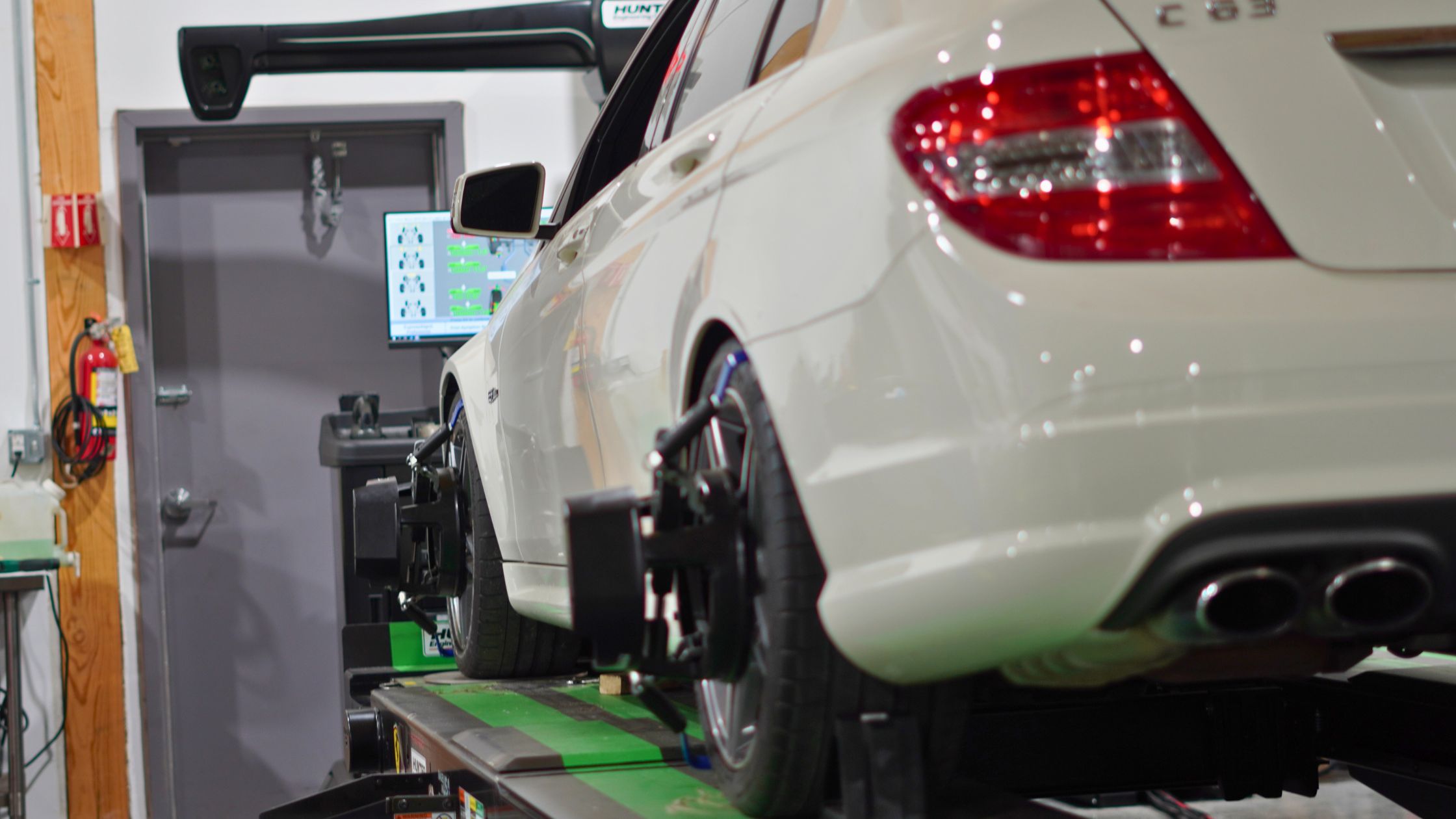
Wheel alignment is one of those maintenance tasks that often gets overlooked until problems start to show up. In simple terms, alignment is the process of adjusting three angles, camber (tilt of the wheels in or out), caster (steering pivot slope), and toe (whether the wheels point slightly inward or outward). When these angles are set to the manufacturer’s specifications, the car drives straight, the tires wear evenly, and the steering feels stable.
When alignment is off, small issues can quickly turn into bigger, more expensive problems.
Common Signs of Poor Alignment
- Vehicle pulling to one side: On a flat road, the car drifts or pulls left or right instead of tracking straight.
- Off-center steering wheel: Even when driving straight, the steering wheel may appear tilted to one side.
- Uneven tire wear: One edge of the tire may wear down faster than the other, often leading to premature replacement.
- Tire squealing in turns: Tires may squeal during low-speed turns, such as pulling into a parking space.
- Vibrations: While vibrations are more commonly caused by unbalanced tires, misalignment can create irregular wear that leads to the same issue.
Why Wheel Alignment Is Important
- Tire longevity: Misalignment causes tires to scrub against the road, wearing them out unevenly and faster than normal.
- Safety and control: Proper alignment improves handling, stability, and steering return-to-center, especially during sudden maneuvers or wet conditions.
- Fuel efficiency: Poor alignment increases rolling resistance, which can reduce gas mileage.
- Technology compatibility: Many modern vehicles with driver-assist systems (such as lane-keeping) require precise alignment and sensor recalibration to function properly.
When to Schedule an Alignment
- When installing new tires
- After hitting a pothole or curb
- After suspension or steering repairs
- At least once a year as part of preventive maintenance
Quick Checks You Can Do
There are a few simple ways to spot alignment issues before they become costly:
- Road test: On a straight, level road, the vehicle should travel straight with the steering wheel centered. A light grip is enough to notice if the car drifts or pulls to one side.
- Tire inspection: Look closely across the tread of each tire, the outer edge, center, and inner edge. Uneven patterns are revealing: edge-only wear often signals alignment issues, while cupping or scalloping may point to balance or suspension problems.
What a Good Alignment Service Includes
Not all alignment services are the same, so it helps to know what to expect. A thorough job should involve:
- Four-wheel alignment for most modern vehicles. (Front-end or thrust-angle alignments apply mainly to vehicles with solid rear axles.)
- Setting alignment angles to the preferred values, not just “within range.”
- Providing a before-and-after printout of measurements and performing a test drive.
Alignment vs. Balancing: Commonly Confused
Alignment and balancing are often mixed up, but they serve different purposes:
- Alignment adjusts camber, caster, and toe angles to keep tires tracking straight and wearing evenly.
- Balancing corrects weight imbalances in the wheel/tire assembly by adding small weights, which cures vibrations felt through the steering wheel or seat.
Tip: If vibrations are the main issue, think about balance first. If the car pulls or tires show uneven wear, alignment is more likely the culprit.
Troubleshooting Look-Alikes
Not every pull is caused by alignment. For example, radial tire pull, a condition caused by the tire itself, can mimic alignment problems. Professional technicians will often swap tires side to side during diagnosis before making adjustments.
One-Page Takeaway
- If the car pulls to one side, the steering wheel is off-center, or tires show uneven wear, it’s time to schedule a four-wheel alignment.
- Combine alignment with tire balancing if vibration is present.
- Get it checked with new tires, after a hard hit or repair, and about once a year as preventative care.
The result? Safer handling, longer tire life, better efficiency, and peace of mind every time you drive.
FAQs About Wheel Alignment
Q1. How often should wheel alignment be done?
Most experts recommend checking alignment at least once a year, but it should also be done whenever new tires are installed, after suspension or steering repairs, or if the vehicle hits a large pothole or curb.
Q2. How long does a wheel alignment take?
A standard four-wheel alignment usually takes between 30 minutes to an hour, depending on the condition of the suspension and whether adjustments are straightforward or require additional work.
Q3. Can poor alignment damage my car?
Yes. Beyond uneven tire wear, misalignment can put added stress on steering and suspension components, potentially leading to premature wear and more expensive repairs.
Q4. Is alignment necessary with new tires?
Absolutely. Installing new tires without proper alignment can cause uneven wear almost immediately, reducing the life of the tires and wasting the investment.
Q5. How do I know if I need an alignment or balancing?
- Alignment issues show up as pulling, crooked steering wheels, or uneven tire wear.
- Balancing issues usually cause vibrations felt through the steering wheel, seat, or floor, especially at certain speeds.
Conclusion
Wheel alignment may not always seem urgent, but it plays a critical role in safety, efficiency, and cost savings. Misalignment leads to uneven tire wear, reduced fuel economy, and compromised handling, issues that are often preventable with timely checks.
By learning to spot the signs, performing quick checks at home, and scheduling regular professional alignments, drivers can extend tire life, improve driving comfort, and ensure their vehicle performs as intended.
In short: A small adjustment today can save money, improve safety, and make every drive smoother tomorrow.