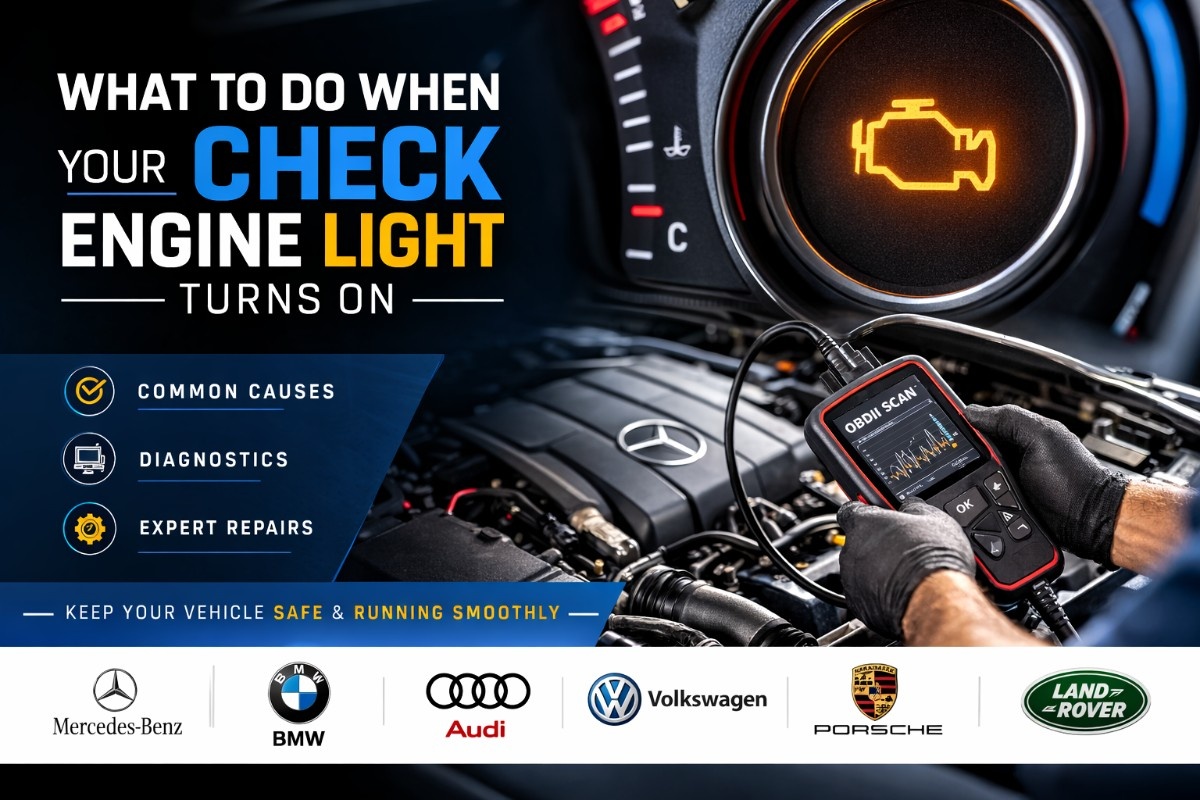
The dreaded check engine light suddenly appearing on your dashboard can be stressful and confusing for any driver. It often triggers immediate concerns like, “Is this a serious problem?” “Is my car still safe to drive?” “Do I need to stop right now?” These questions are completely normal, and at Euro Garage, leander we hear them every single day.
Owners of European and German-engineered vehicles such as Mercedes-Benz, BMW, Audi, Volkswagen, Porsche, Volvo, and Land Rover are especially familiar with this situation. These vehicles are built with advanced engine management and sensor systems, which means even a small irregularity can trigger the check engine light. While this doesn’t always mean a major failure, it does indicate that your vehicle needs professional attention.
This guide is designed to help you clearly understand why your check engine light turns on, what steps you should take next, and when to seek expert help. Most importantly, it explains how the specialized diagnostics and repair services at Euro Garage can accurately identify the issue and protect your vehicle’s performance, safety, and long-term reliability.
1. What the Check Engine Light Really Means
Your vehicle’s check engine light, also called the Malfunction Indicator Lamp (MIL), is an important warning built into your car’s onboard computer system. This system continuously monitors your engine, emissions, and overall performance to make sure everything is operating within proper limits. When the computer detects something that isn’t working the way it should, it stores a diagnostic trouble code and turns the check engine light on to alert you.
In many cases, a steady check engine light means the system has detected an issue that should be inspected soon. While the vehicle may still drive normally, the warning is a sign that something needs professional attention to prevent further problems.
A flashing check engine light, however, is much more serious. It usually indicates a problem that could cause immediate damage to critical engine components if you continue driving. When this happens, it’s best to stop driving and have the vehicle checked as soon as possible by a qualified technician.
The check engine light can be triggered by a wide range of issues. Sometimes it’s something minor and easily fixable, such as a loose or faulty gas cap. Other times, it can point to more serious concerns like engine misfires, sensor failures, or emissions system malfunctions. This is why proper diagnostics are essential — especially for modern European vehicles that rely heavily on advanced electronic systems.
2. Why You Shouldn’t Ignore the Check Engine Light
Many drivers believe that if their vehicle is still driving normally, the check engine light is not urgent. However, this can be a costly misunderstanding. Even when there are no noticeable symptoms, the light means your vehicle’s onboard computer has detected something operating outside normal limits.
Ignoring this warning can allow a small issue to grow into a serious and expensive repair. Addressing the problem early helps protect your vehicle’s performance, reliability, and safety—especially for European cars.
Here’s why ignoring the check engine light is a bad idea:
- Small problems can turn into major repairs
What starts as a minor sensor issue can place extra stress on engine components and lead to costly failures if left unchecked. - Reduced fuel economy and performance
Faulty emissions or airflow sensors can cause the engine to run inefficiently, leading to poor mileage and sluggish performance. - Risk of damage to expensive components
Engine misfires, even if barely noticeable, can overheat and damage the catalytic converter—one of the most expensive parts to replace. - Increased emissions and environmental impact
Ignoring the warning light can cause your vehicle to release higher emissions and may lead to failed emissions testing. - European vehicles require precise care
European and German-engineered vehicles use advanced, finely tuned systems. Even small faults can quickly affect performance, drivability, or safety if not diagnosed correctly.
Because these systems are so interconnected, early professional diagnostics at Euro Garage can prevent unnecessary damage and help keep your vehicle running at its best.
3. Step-By-Step What to Do When the Light Comes On
3.1. Don’t Panic — But Act Promptly
Seeing the check engine light turn on can be alarming, but it doesn’t always mean your vehicle will break down immediately. The key is to stay calm and take the right steps as soon as possible. Understanding what the light is telling you can help prevent unnecessary damage and stress.
Here’s what you should do when the check engine light comes on:
- Check whether the light is steady or flashing
A steady check engine light usually indicates a non-urgent issue that should be inspected soon.
A flashing check engine light, however, signals a serious problem—often a severe engine misfire—that can cause rapid damage. If the light is flashing, stop driving and seek professional service immediately. - Pay attention to how your vehicle is driving
If your car is running smoothly and no other warning lights are on, the issue may be minor. However, this does not mean it should be ignored. Even small faults require proper diagnosis to prevent future problems. - Avoid unnecessary driving
While short trips may be safe with a steady light, continued driving without diagnosis can allow the issue to worsen over time—especially in European vehicles with advanced engine systems.
At Euro Garage, we recommend having your vehicle checked as soon as the check engine light appears. Early diagnostics help identify the issue accurately and keep your vehicle safe, reliable, and performing as designed.
3.2. Check for Easy Fixes
In some cases, the check engine light can be triggered by a small and easily correctable issue. Before assuming the worst, there are a few simple things you can check on your own. These quick checks may save you time, but they should never replace proper diagnostics if the light stays on.
Simple things to check first:
- Loose or improperly tightened fuel cap
One of the most common and overlooked causes of a check engine light is a loose gas cap. If the cap isn’t sealed correctly, it can cause a leak in the fuel vapor system and trigger the warning light.
Tighten the fuel cap until it clicks, then drive for a few miles. If the issue was minor, the system may reset and the light may turn off on its own. - Make sure the cap isn’t damaged
If the gas cap looks cracked or worn, it may not seal properly—even when tightened. A damaged cap should be replaced to prevent recurring warning lights.
When to seek professional help
If the check engine light remains on after re-tightening or replacing the fuel cap, it’s a clear sign that the issue is more complex and requires professional diagnosis. Modern European vehicles rely on advanced sensors and electronic systems, and only proper diagnostic equipment can accurately identify the root cause.
At Euro Garage, our specialized diagnostics help determine whether the issue is minor or something that needs immediate attention—so you’re never left guessing.
3.3. Visit a European Auto Specialist
When your check engine light turns on, choosing the right repair shop makes a big difference. At Euro Garage, we specialize in European vehicles and provide factory-level diagnostics and repairs designed specifically for these advanced systems. This is important because European cars use complex electronics and software that general repair shops or basic “code-reading” tools often cannot fully interpret.
Unlike quick scans that only display a fault code, our approach focuses on understanding why the warning light appeared in the first place. Accurate diagnosis ensures the problem is fixed correctly the first time.
Here’s what Euro Garage does for you:
Professional Computer / OBD Diagnostics
When your check engine light is on, our first step is a comprehensive onboard diagnostic scan using advanced,factory diagnostic equipment. This process goes far beyond a basic code read.
Our diagnostic process includes:
- Reading diagnostic trouble codes
We identify the exact fault codes stored in your vehicle’s computer system. - Analyzing live sensor data
We monitor real-time data from critical engine and emissions sensors to understand how the vehicle is performing. - Testing emissions and performance systems
This helps determine whether the issue affects fuel efficiency, emissions, or overall drivability. - Verifying conditions that trigger the warning light
We recreate the conditions that caused the check engine light to turn on, ensuring an accurate and complete diagnosis.
Why this approach matters
This precise and methodical process allows us to identify the root cause of the problem—not just the symptom. As a result, we avoid unnecessary part replacements, reduce repeat visits, and save you both time and money while protecting your vehicle’s long-term performance.
At Euro Garage, your European vehicle receives the expert care and attention it was engineered to require.
Engine Diagnostics & Repair
Once your vehicle’s diagnostic codes have been carefully read and analyzed, our experienced technicians take the time to clearly explain everything to you. We believe in transparency, so you always understand what’s happening with your vehicle before any repairs begin.
Here’s what you can expect from our engine diagnostics and repair process:
- What the diagnostic codes mean
We break down the technical information into simple, easy-to-understand language, so you know exactly what the check engine light is indicating. - Which part or system is affected
Whether the issue involves the engine, emissions system, or electrical components, we clearly identify the affected area. - Recommended repair actions
Based on accurate diagnostics, we recommend only the repairs your vehicle truly needs—no guesswork or unnecessary services. - Estimated cost and repair timeline
You’ll receive a clear explanation of pricing and how long the repair is expected to take, helping you plan with confidence.
Our technicians handle everything from oxygen sensors and catalytic converters to ignition systems, fuel trims, and performance-related components. Every repair is performed with precision, using quality parts and proven techniques to ensure reliability, efficiency, and long-term performance.
At Euro Garage, your European vehicle receives the specialized care and expertise it was designed for.
3.4. Routine Maintenance to Prevent Future Issues
In many situations, a check engine light is triggered not by a sudden failure, but by normal wear and tear that develops over time. With proper and timely maintenance, many of these issues can be prevented before they ever turn into warning lights or costly repairs.
Regular maintenance plays a key role in keeping your European vehicle running efficiently and reliably.
How routine maintenance helps prevent check engine light issues:
- Maintains proper air–fuel balance
Regular inspections and tune-ups ensure that sensors, fuel delivery, and airflow systems are working together correctly, helping the engine run smoothly and efficiently. - Identifies worn or failing sensors early
Many check engine light issues start with aging sensors. Routine service allows technicians to catch and address these problems before they cause performance issues or trigger warning lights. - Reduces rough idling and emissions problems
Proper maintenance helps prevent issues such as rough idling, poor acceleration, and increased emissions—common reasons the check engine light turns on. - Supports long-term engine performance
Clean fluids, healthy components, and regular inspections help protect critical engine systems and extend the life of your vehicle.
At Euro Garage, our maintenance services—including engine tune-ups, fluid replacements, and thorough inspections—are tailored specifically for European vehicles. This proactive approach keeps your car healthier, improves performance, and greatly reduces the chances of unexpected check engine warnings.
4. Common Causes We Diagnose at Euro Garage
Every vehicle is different, but over the years, our technicians at Euro Garage have identified several common issues that frequently cause the check engine light to turn on in European vehicles. With advanced computer diagnostics and hands-on expertise, we are able to accurately identify these problems and address them before they lead to bigger repairs.
Some of the most common causes we diagnose include:
Faulty Oxygen Sensor
Oxygen sensors play a critical role in monitoring the air–fuel mixture and ensuring proper combustion. When an oxygen sensor fails or sends incorrect readings, it can cause poor fuel economy, reduced engine performance, and increased emissions. If left unaddressed, a faulty oxygen sensor can also lead to damage in other engine components.
Catalytic Converter Problems
The catalytic converter is responsible for reducing harmful emissions before they exit the exhaust system. Issues such as engine misfires, overheating, or unresolved sensor problems can cause the catalytic converter to fail. Early diagnosis at Euro Garage helps prevent extensive damage and avoids the high cost of catalytic converter replacement.
Mass Airflow (MAF) or Intake Sensor Issues
Mass airflow and intake sensors measure how much air enters the engine so the computer can determine the correct amount of fuel to inject. When these sensors malfunction, the engine may run too rich or too lean, leading to poor performance, hesitation, and a check engine light.
Battery or Electrical System Faults
Modern European vehicles rely heavily on sophisticated electrical systems. Weak batteries, failing alternators, corroded connections, or voltage irregularities can disrupt communication between control modules and trigger warning lights—even when the engine itself is running fine.
Accurate Diagnostics Make the Difference
At Euro Garage, our advanced computer diagnostics reveal the exact fault codes and system data, allowing us to pinpoint precisely which component or system needs attention. This accurate approach eliminates guesswork, reduces unnecessary repairs, and ensures your vehicle receives the correct solution the first time.
5. Can You Keep Driving with the Check Engine Light On?
In some situations, you may be able to continue driving for a short period after the check engine light comes on—but this depends entirely on how the vehicle is behaving and what type of warning is being displayed. Understanding the difference can help prevent serious damage.
You may be able to drive briefly if:
- The check engine light is steady, not flashing
A steady light usually indicates a non-urgent issue, but one that still needs professional attention. - The vehicle is driving normally
If there is no noticeable loss of power, rough idling, or unusual behavior, the issue may be minor. - No other warning lights are illuminated
When no additional alerts appear, the system may be detecting a single fault rather than a critical failure.
Why you shouldn’t delay service
Even when the vehicle seems fine, a steady check engine light means there is an underlying issue affecting a monitored system. Delaying diagnosis can allow the problem to worsen over time, leading to reduced performance or more expensive repairs—especially in European vehicles with complex engine systems.
Stop driving and seek service immediately if:
- The check engine light is flashing
This often indicates a serious problem, such as a severe engine misfire, that can quickly cause damage. - The vehicle feels abnormal
Signs like loss of power, unusual noises, strong odors, or visible smoke are clear warnings to stop driving.
Continuing to drive under these conditions can result in major engine damage and costly repairs. At Euro Garage, we recommend having your vehicle inspected as soon as possible to ensure safety and protect your investment.
6. Why Choose Euro Garage for Check Engine Light Service
When it comes to diagnosing and repairing check engine light issues, experience and specialization matter. At Euro Garage, we bring over two decades of combined hands-on experience working exclusively with European and German-engineered vehicles. Our team understands the advanced technology, precision engineering, and unique service requirements of brands like Mercedes-Benz, BMW, Audi, Volkswagen, Porsche, and Land Rover.
We don’t believe in quick fixes or guesswork. Our goal is to provide accurate diagnostics and long-term solutions that protect your vehicle’s performance and reliability.
What sets Euro Garage apart:
- Specialized European and German vehicle expertise
Our technicians are trained to work specifically on European vehicles, using brand-specific tools and procedures. - Dedicated check engine light diagnostics
We use advanced computer and OBD diagnostic equipment to identify the exact cause of the warning—beyond simply reading or clearing codes. - Engine repairs focused on performance and longevity
Every repair is designed to restore proper engine function while supporting long-term durability. - Honest and transparent diagnostics and pricing
We explain the problem clearly, outline your repair options, and provide straightforward pricing with no unnecessary services. - Personalized customer communication and care
We take the time to answer your questions and keep you informed throughout the diagnostic and repair process.
Whether your check engine light appears unexpectedly or you’re dealing with a recurring issue, Euro Garage has the tools, training, and experience to diagnose and repair the underlying problem—not just turn the light off. Our focus is on getting your European vehicle back to peak performance with confidence and peace of mind.
7. Quick Recap: What to Do When Your Check Engine Light Turns On
Seeing the check engine light illuminate on your dashboard can be stressful, but following the right steps ensures you handle it safely and efficiently. Here’s a clear, step-by-step recap of what to do:
- Don’t panic
A check engine light doesn’t always indicate a major problem. Stay calm and take the appropriate action. - Check the basics
Start with simple solutions like tightening the fuel cap. Drive for a few miles to see if the light resets. Small issues are often easy to fix, but a persistent light indicates a deeper problem. - Observe your vehicle’s behavior
Pay attention to how your car is running. Notice any loss of power, rough idling, unusual noises, or flashing lights. If any of these occur, act quickly and avoid driving further until it’s inspected. - Bring your vehicle in for professional diagnostics
At Euro Garage, we use advanced OBD and computer diagnostic tools to pinpoint the exact cause of the warning. This ensures an accurate diagnosis and prevents guesswork. - Get recommended repairs
Once the issue is identified, our experienced technicians provide clear repair recommendations. From sensor replacements to engine performance fixes, we handle everything with precision to get your European vehicle back on the road safely and reliably.
Following these steps can save you time, money, and stress, while protecting the long-term performance of your vehicle. At Euro Garage, we’re here to ensure your car receives the expert care it deserves.
Frequently Asked Questions (FAQs)
1. What should I do immediately when my check engine light turns on?
First, don’t panic. Check whether the light is steady or flashing. If it’s flashing, stop driving and bring your vehicle to Euro Garage right away for professional diagnostics. Even a steady light should be checked promptly, especially on European vehicles.
2. Can I drive my car with the check engine light on?
If the light is steady and the vehicle is driving normally, you may drive a short distance. However, if the light is flashing or you notice poor performance, rough idling, or loss of power, you should stop driving and have the vehicle inspected immediately.
3. Which vehicles does Euro Garage service for check engine light issues?
Euro Garage specializes in European and German vehicles, including BMW, Mercedes-Benz, Audi, Volkswagen, Porsche, and Land Rover. We use factory-level diagnostic tools designed specifically for these brands.
4. Will Euro Garage simply reset the check engine light?
No. We don’t just clear the light. Euro Garage performs complete diagnostic testing to identify the root cause of the issue and recommends the correct repair to prevent the problem from returning.
5. What problems commonly cause the check engine light to turn on?
Common causes include faulty oxygen sensors, engine misfires, airflow sensor issues, emissions system problems, fuel system faults, and electrical issues. Our advanced diagnostics allow us to pinpoint the exact problem.
6. Why should I choose Euro Garage for check engine light diagnostics?
Euro Garage is a European vehicle specialist offering advanced computer diagnostics, experienced technicians, honest recommendations, and precision repairs—without guesswork or unnecessary services.
Schedule Your Check Engine Diagnosis Today
If your check engine light is on, don’t wait or ignore it — the sooner it’s inspected, the better the outcome for your vehicle’s performance and longevity. At Euro Garage, we specialize in European and German vehicles and provide precise diagnostics, expert repairs, and reliable solutions that address the root cause of the problem—not just the warning light.
Our experienced technicians use advanced OBD and computer diagnostics, ensuring every issue is identified and repaired with the care your vehicle deserves. Whether it’s a minor sensor adjustment or a more complex engine repair, we make sure your car is running safely, efficiently, and at peak performance.
Don’t wait until a small problem becomes a costly repair. Contact Euro Garage today to schedule your check engine light diagnostics and get back to driving with confidence and peace of mind.